
News Desk · Everything Space
Trace gas detection suggests Mars volcanoes are dormant, not extinct
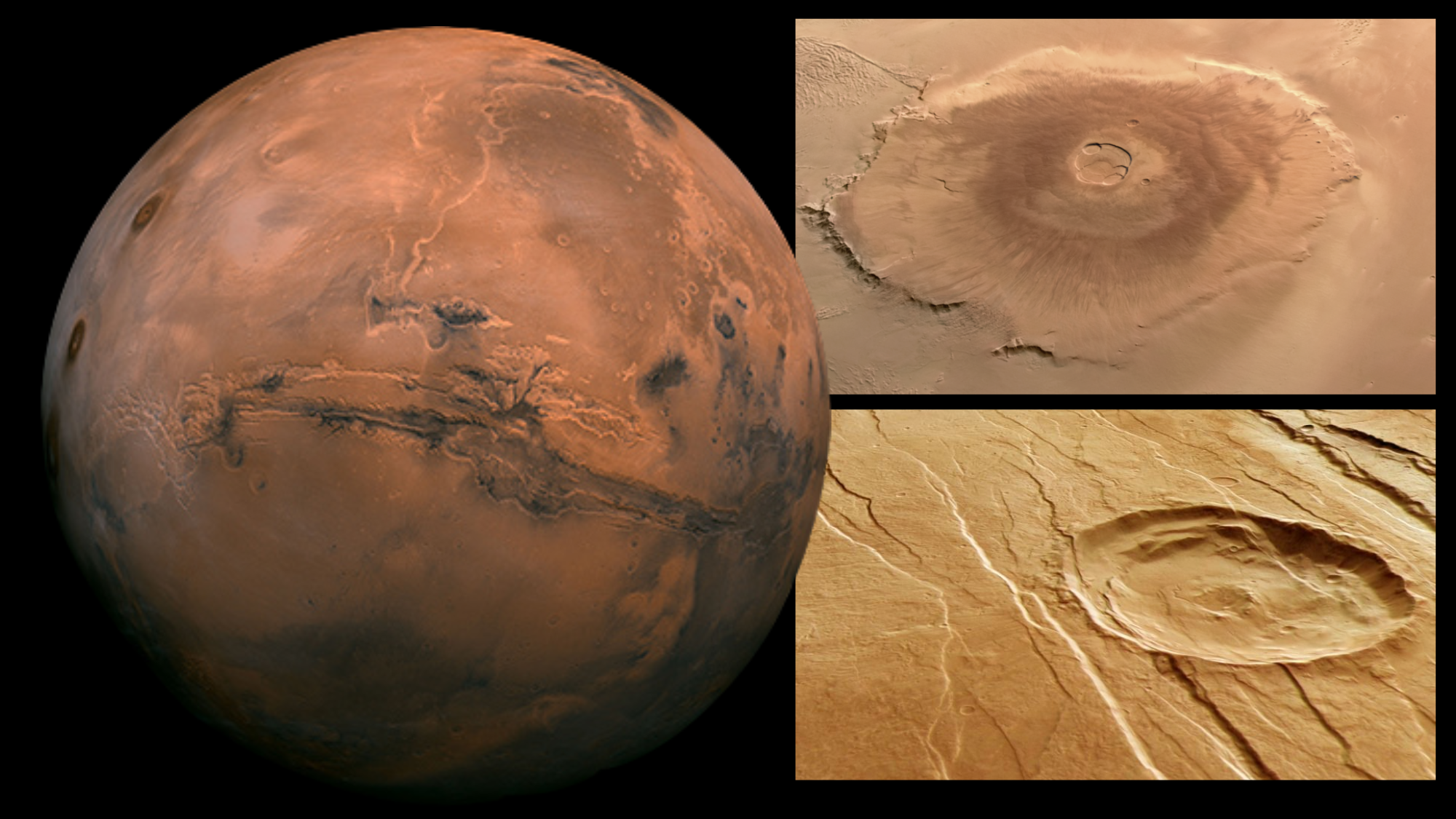
Image: Space.com
ESA's orbiter found hydrogen chloride seeping from Martian fissures, hinting at lingering internal heat and possible habitable niches below the surface.
New observations from a European Space Agency orbiter indicate that Mars's volcanoes may be dormant rather than completely dead, challenging the long-held view that the planet is geologically inactive. The findings center on the Alba Mons region, part of the Tharsis bulge that also hosts Olympus Mons, the solar system's tallest volcano.
The ExoMars Trace Gas Orbiter detected hydrogen chloride gas escaping through fissures in the Alba Mons region. On Earth, this gas is typically associated with magmatic vents, where it rises from molten rock beneath the surface. Its presence on Mars is being treated as a telltale sign of residual volcanic activity.
Researchers first noticed something unusual when hydrogen chloride spiked during the Martian summer in the northern hemisphere, the opposite of its normal seasonal pattern tied to the water and dust cycle. Investigating further, they linked the anomaly to narrow, fresh fissures on the volcano's flanks, consistent with gas escaping from underground sources.
The team proposes that gas rising from Mars's interior becomes trapped under ice during winter, then is released as the ice sublimates in summer, producing the observed spikes. This points to a dormant magma chamber still active beneath the surface rather than a volcanic system that shut down long ago.
The discovery carries implications beyond volcanism. Scientists suggest that magmatic gases like hydrogen chloride may once have been more abundant, contributing to a thicker atmosphere and warmer climate capable of sustaining surface water. Where lava once interacted with groundwater, warm, sheltered environments could have formed that might have supported microbial life, making such fissures a potential target in the search for life on Mars.
The research was published this week in a peer-reviewed science journal.
Sources
Mars isn't dead — recent volcanic activity reveals it's just sleeping
Written in Everything Space’s own words by our news-desk model from the sources above, and checked against them in code: every number in this report appears in its sources, and no sentence is copied from them.