
News Desk · Everything Space
Study finds the Sun's largest sunspots could theoretically generate superflares
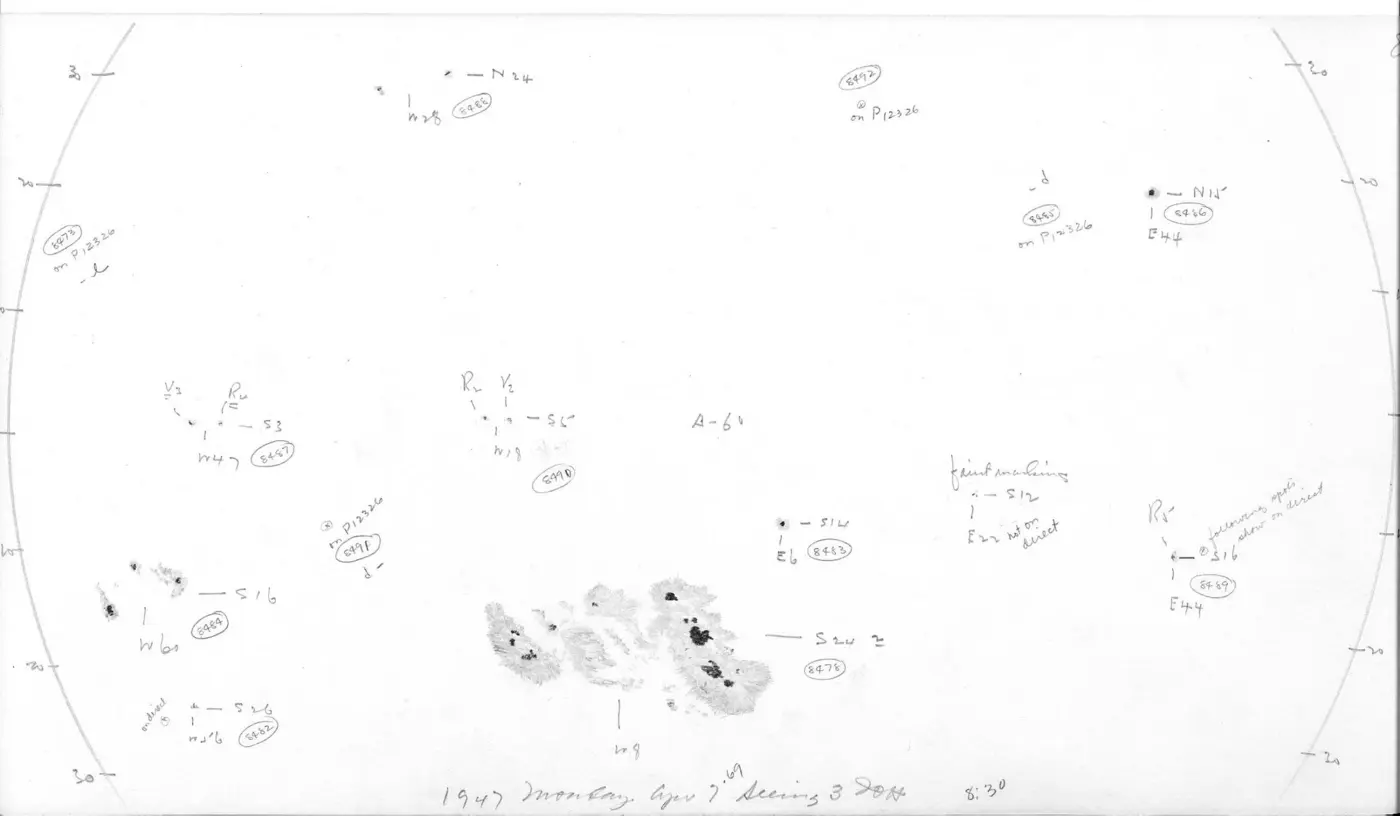
Image: Universe Today
New analysis of historical sunspot data suggests the Sun is not immune to the extreme flares seen on other stars, raising stakes for grid resilience.
A new study challenges the long-held view that the Sun is too calm to ever produce a 'superflare,' the kind of extreme outburst observed on other Sun-like stars. Researchers led by Natalie Krivova at the Max Planck Institute for Solar System Research examined the relationship between active regions on the Sun, the size of the flare ribbons they leave behind, and the total energy released during flares.
Using six years of data from NASA's Solar Dynamics Observatory, the team found that flare energy scales exponentially with the size of the glowing ribbons left after a magnetic snap-back in an active region. Bigger active regions produce bigger ribbons, and bigger ribbons mean disproportionately larger potential energy release.
Applying this relationship to historical sunspot records, the researchers estimated the energy behind the 1859 Carrington Event, the most famous solar storm on record, which caused telegraph equipment to spark and produced auroras visible near the equator. Their calculation lined up closely with existing estimates of that storm's strength, though it fell just short of superflare territory.
The bigger surprise came from the 1947 'Great Sunspot,' more than twice the size of the one behind the Carrington Event. Plugging its dimensions into the new formula pushed the theoretical maximum energy release into superflare-scale territory, comparable to the most violent eruptions seen on other stars.
The authors stress that a sunspot reaching that size does not guarantee an eruption of that magnitude, and the Great Sunspot itself never released anywhere near its theoretical maximum. Such large active regions are rare, but researchers estimate storms of this scale occur roughly once a century.
If an eruption of that size were aimed at Earth, the accompanying coronal mass ejection could damage electrical grids across large regions, with repairs potentially taking months given current preparedness levels.
The findings do not mean a superflare from the Sun is imminent, but they suggest the risk cannot be ruled out and reinforce warnings that modern infrastructure remains vulnerable to a major solar event.
Sources
The Sun Is Physically Capable of Producing a "Superflare" According To A New Study
Written in Everything Space’s own words by our news-desk model from the sources above, and checked against them in code: every number in this report appears in its sources, and no sentence is copied from them.