
News Desk · Everything Space
Simulations map when and where the first supermassive black hole seeds could form
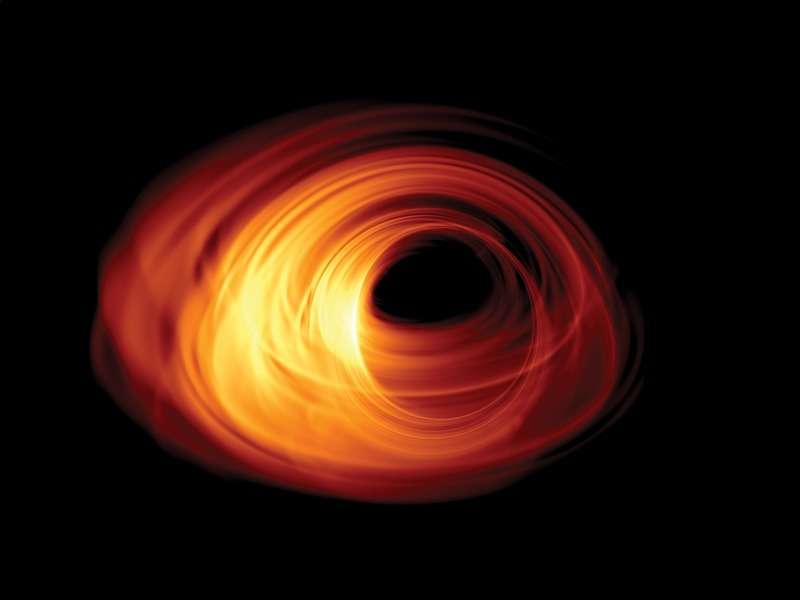
Image: Universe Today
New models suggest direct-collapse black holes arose within the Universe's first 500 million years in dense, dark-matter-rich regions, offering testable predictions for future telescope surveys.
A team of astronomers has used computer simulations to reconstruct the environments where the earliest seeds of supermassive black holes may have formed, addressing a puzzle raised by James Webb Space Telescope observations of unexpectedly massive black holes in the very early Universe.
Traditional models suggest black holes grow from the collapse of dying stars, gradually merging into larger ones. But that process seems too slow to explain the giant black holes JWST has spotted less than a billion years after the Big Bang. An alternative idea, called the Direct-Collapse Black Hole scenario, proposes that massive clouds of cold gas collapsed directly into black holes without an intermediate stellar phase.
Led by a researcher at the University of Edinburgh, the international team combined simulations of dark matter halo mergers with a model tracking the visible matter and black hole growth within those halos. This let them trace how the density and clustering of matter in the early Universe shaped the conditions favorable for direct collapse.
The simulations indicate that these massive black hole seeds could have started forming as early as roughly 500 million years after the Big Bang. This window closed a few hundred million years later, once explosions from the earliest generation of stars enriched the surrounding gas with heavier elements, making direct collapse less likely.
The findings support the idea that direct collapse is most likely to occur in densely clustered, overdense regions of the early cosmos. The researchers say their model offers predictions that can be tested by searching for companion black hole-powered objects near known distant quasars, giving future observational campaigns a concrete benchmark to check against.
Sources
Researchers Measure the Environment Where the First Supermassive Black Holes Formed
Written in Everything Space’s own words by our news-desk model from the sources above, and checked against them in code: every number in this report appears in its sources, and no sentence is copied from them.