
News Desk · Everything Space
Scientists build a lifeless virtual Earth to help spot real biosignatures on exoplanets
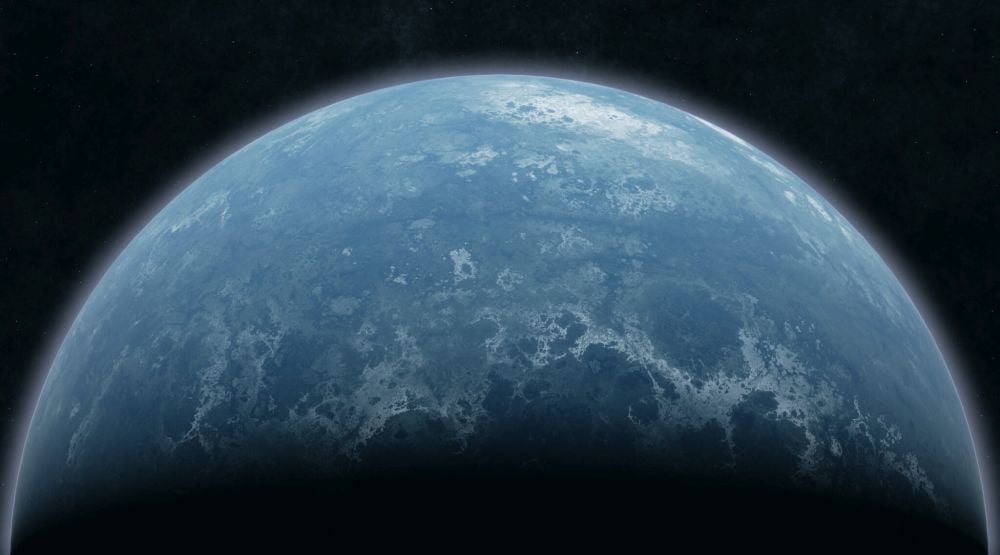
Image: Universe Today
The model helps researchers separate atmospheric signs of habitability from true signs of life as future telescopes scan distant worlds.
Researchers have built a detailed computer model of what Earth's atmosphere and surface would look like if life had never evolved here, aiming to help future telescopes distinguish planets that merely could support life from those that actually host it.
The work, led by Samantha Gilbert-Janizek during her postdoctoral research at the University of Washington, couples models of Earth's interior, atmosphere, and surface across billions of years of evolution. The model successfully reproduces nineteen measurable properties of preindustrial Earth, including atmospheric carbon dioxide and water vapor, surface temperature, albedo, ocean mass, and mantle heat flow.
The motivation is a looming problem for upcoming observatories like NASA's planned Habitable Worlds Observatory, which will attempt to directly image rocky planets around sunlike stars and analyze their atmospheres for hints of life. Because Earth is the only known example of a habitable and inhabited world, scientists have lacked a clear baseline for what a habitable but lifeless planet's atmosphere would look like, making it hard to rule out false positives.
Using the lifeless Earth model, the team generated simulated reflected-light spectra across the wavelength range the new observatory is expected to use, incorporating the signatures of gases such as carbon dioxide, water, oxygen, ozone, and methane. These synthetic spectra can be compared against real observations of exoplanets to judge whether an atmosphere's chemistry could be explained without biology.
The model relies on several assumptions, including that plate tectonics operated throughout most of Earth's history and that the simulation begins after the planet's early magma ocean had solidified. The authors acknowledge competing theories about when plate tectonics began, but note their approach aligns with the mainstream geological evidence.
Notably, the model shows that a planet can sustain long-term habitable conditions, such as stable liquid water, without needing life to be present, reinforcing the challenge of separating livable worlds from living ones.
The team describes the model as a flexible framework that can be adapted to other planets by adjusting inputs like surface albedo and atmospheric composition, with the goal of helping researchers estimate the likelihood that a given exoplanet's atmosphere reflects a living world rather than a merely habitable one.
Sources
A Virtual Lifeless Earth Will Help Scientists Find Life on Exoplanets
Written in Everything Space’s own words by our news-desk model from the sources above, and checked against them in code: every number in this report appears in its sources, and no sentence is copied from them.