
News Desk · Everything Space
New study finds sunspot 'cutoff' predicts strength of next solar cycle
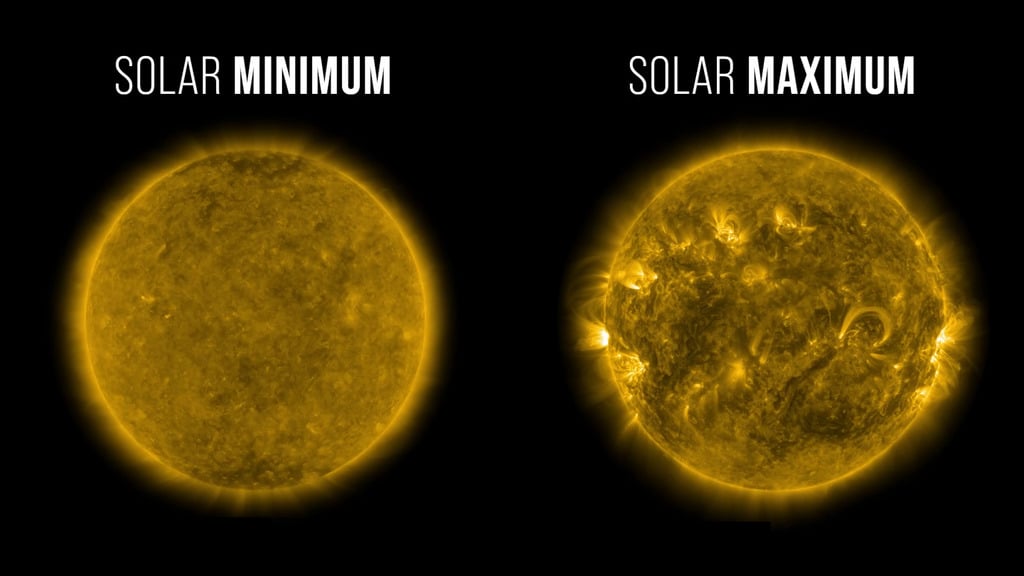
Image: Universe Today
A researcher's analysis of past solar cycles suggests a sharp drop-off in sunspot activity can forecast the intensity of the following cycle.
A new study proposes a way to better forecast the strength of upcoming solar cycles by examining how each cycle ends rather than how it rises and falls overall.
The Sun's activity follows an 11-year rhythm of rising and falling magnetic turbulence, known as the solar cycle, but predicting how strong the next peak will be has remained difficult. Solar activity matters because it can disrupt satellites, power grids, and other technology on Earth.
Physicist Sandra Chapman examined data from previous solar cycles and found that instead of a gradual decline after solar maximum, activity drops off sharply at a distinct point. She found that the number of sunspots present at that sudden cutoff correlates with how strong the following solar maximum will be. A weaker link also exists between the strength of one maximum and the next one's intensity.
The Sun is currently in Cycle 25, which started in 2019 and has recently passed its peak, with activity expected to decline until around 2030. Using her method, Chapman predicts that the upcoming Cycle 26 will be somewhat weaker than Cycle 25.
The real test of this approach will come when the Sun reaches its own sharp cutoff point, which, based on patterns from Cycle 24, is expected around 2028. After that point occurs, Chapman intends to issue a firmer prediction for Cycle 26's strength.
Confirmation of whether this method accurately predicts solar behavior will not arrive until the following cycle reaches its own peak, sometime in the mid-to-late 2030s.
Sources
Written in Everything Space’s own words by our news-desk model from the sources above, and checked against them in code: every number in this report appears in its sources, and no sentence is copied from them.