
News Desk · Everything Space
NASA's Swift telescope is falling uncontrolled back to Earth after 20 years in orbit
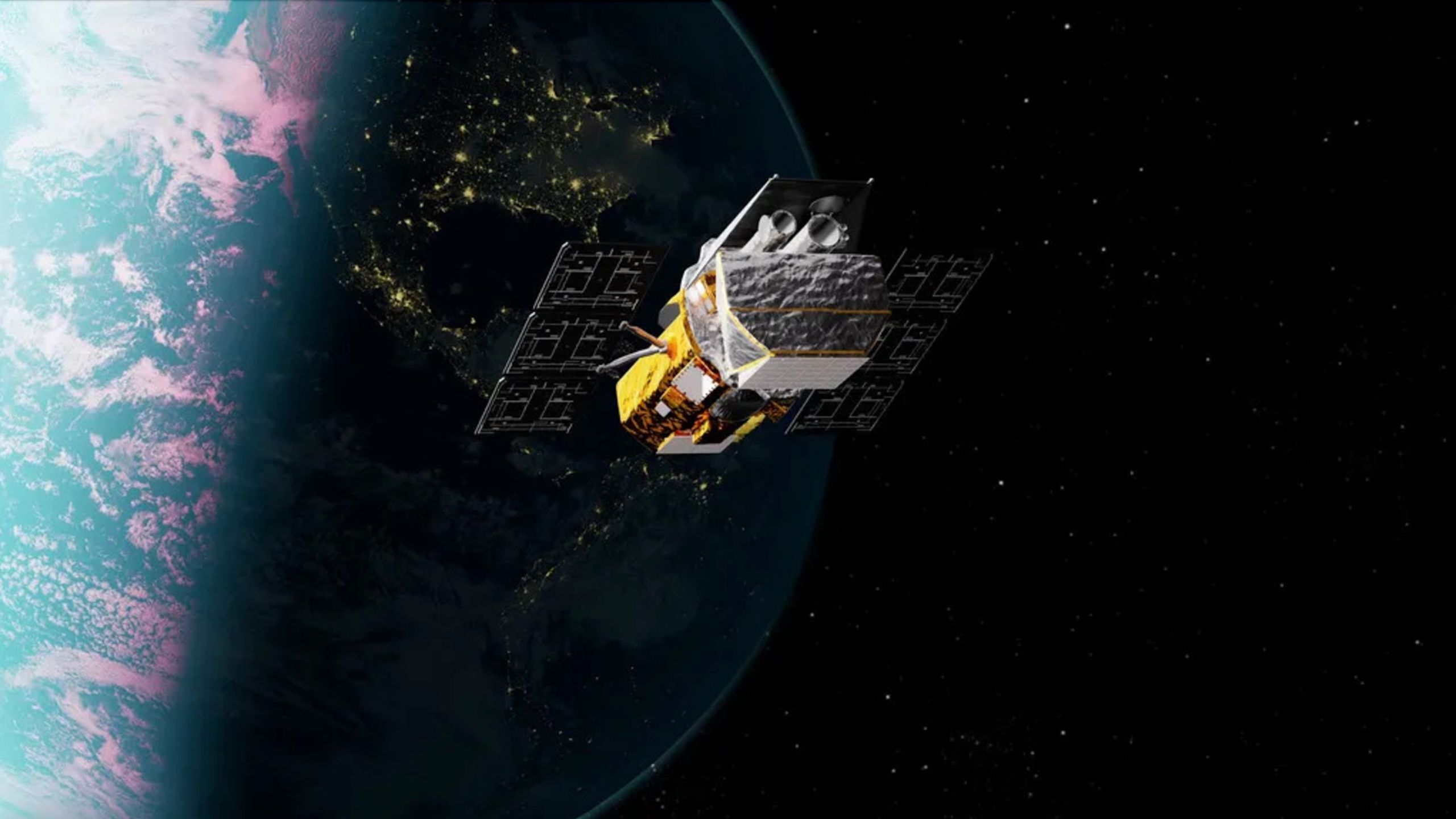
Image: Space.com
A failed attempt to boost the gamma-ray observatory's orbit means its two-decade mission will end in an unguided atmospheric reentry within days.
NASA's Neil Gehrels Swift Observatory is expected to reenter Earth's atmosphere within the next few days in an uncontrolled descent, after efforts to lift it into a higher orbit failed.
Swift launched in November 2004 and spent roughly two decades studying gamma-ray bursts and other high-energy cosmic phenomena using three onboard instruments: a Burst Alert Telescope, an X-Ray Telescope, and an Ultraviolet/Optical Telescope. Earlier this fall, NASA reported that the roughly 3,300-pound spacecraft's orbit had decayed to about 171 miles above Earth, leaving it unable to counteract increasing atmospheric drag. The observatory entered safe mode, and its operations team at Pennsylvania State University sent a command that ended its active mission ahead of reentry.
The exact timing and location of Swift's fall remain unknown, though researchers are tracking it closely. Experts note that Swift's orbital path only crosses a band within about 21 degrees of the equator, an area that is mostly ocean but does pass over populated regions of Africa, South and Southeast Asia, and Latin America.
Most of the spacecraft's structure, including aluminum components, wiring and electronics, is expected to burn up during reentry. Denser, heat-resistant parts such as the satellite's reaction wheels and telescope optics are more likely to survive to the ground, though experts say any surviving debris would likely be small and unrecognizable fragments rather than intact hardware.
Specialists tracking orbital debris describe the risk to people on the ground as very low, consistent with space agency guidelines that require a casualty risk no greater than one in 10,000 for reentering spacecraft. While no detailed public risk assessment has been released for Swift specifically, that threshold is a standard requirement NASA applies to its missions.
Observers note that Swift's case reflects a broader trend: the number of uncontrolled satellite reentries has grown sharply in recent years as more spacecraft are launched and retired. That trend has increased calls for designing satellites to burn up safely or guide themselves into remote ocean areas at the end of their operational lives.
Sources
NASA's Swift space telescope is about to crash to Earth. Where will it fall?
Written in Everything Space’s own words by our news-desk model from the sources above, and checked against them in code: every number in this report appears in its sources, and no sentence is copied from them.