
News Desk · Everything Space
China details two-launch crewed Moon landing plan using Long March 10 rockets
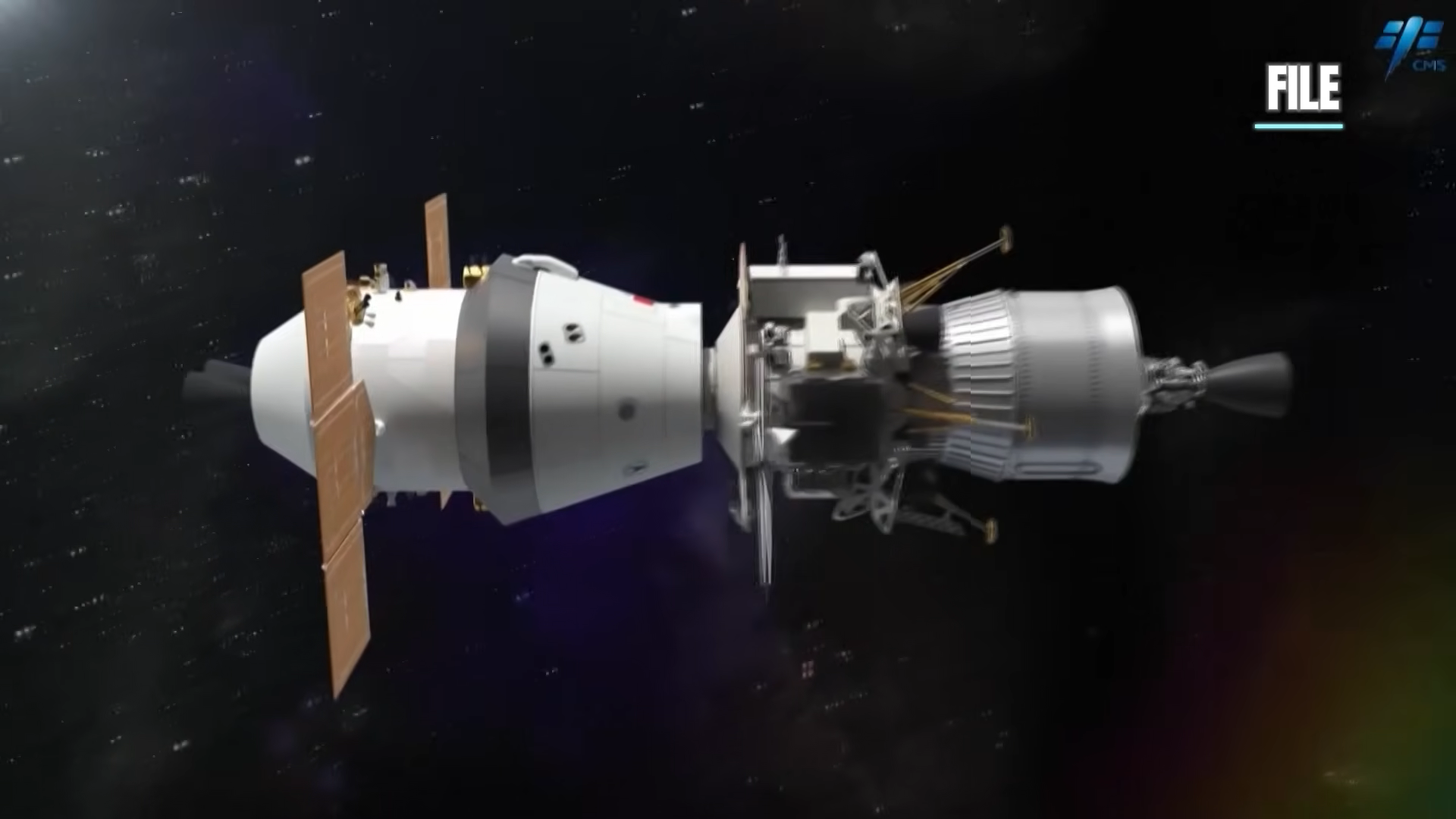
Image: Universe Today
The newly unveiled architecture, involving orbital rendezvous and an uncrewed test landing, puts China on a clearer path toward a 2030 crewed lunar mission.
China's human spaceflight program has laid out a detailed plan for landing astronauts on the Moon, according to a presentation by the deputy chief designer of the crewed space program. The approach calls for two separate launches of the Long March 10 rocket, one carrying the Lanyue lunar lander and the other carrying the Mengzhou crew capsule, which will meet in lunar orbit before two of three crew members descend to the surface.
The plan was presented at a manned spaceflight symposium in Beijing that drew hundreds of specialists to discuss the technology and challenges facing China's space ambitions. It builds on preliminary details shared in 2023, when officials first described using twin Long March 10 launches to deliver the lander and spacecraft separately, and follows the 2024 naming of the Lanyue lander.
Several hardware milestones have already been completed, including a tethered test of the lander's descent and engine systems, abort and escape tests of the Mengzhou capsule, and a low-altitude flight demonstration of the Long March 10 rocket. These steps are meant to keep China on schedule for a crewed lunar landing by 2030.
According to the presentation, China intends to validate its hardware incrementally, first flying near-Earth versions of the rocket and capsule to and from the Tiangong space station before attempting the full lunar versions. An uncrewed lunar landing by the Lanyue lander is also planned ahead of any crewed attempt, to gather data on surface conditions and confirm that systems such as docking, landing, and re-ascent function as intended.
This staged, near-Earth-then-Moon validation strategy mirrors elements of NASA's Artemis program, which flew an uncrewed Orion capsule around the Moon before planning a crewed flyby, and which now also relies on a separate lander meeting the crew capsule in lunar orbit.
Beyond the landing itself, China has described longer-term ambitions for an International Lunar Research Station, envisioned to begin construction in the next decade using a new super heavy-lift rocket. Details about the station's final form, and the extent of international partners' involvement, remain unsettled.
Sources
Written in Everything Space’s own words by our news-desk model from the sources above, and checked against them in code: every number in this report appears in its sources, and no sentence is copied from them.