
SpacePolicyOnline.com · Fri, 23 Oct 2026 03:23:10 GMT
NASA Safety Panel Concerned About Artemis IV, Future Access to LEO
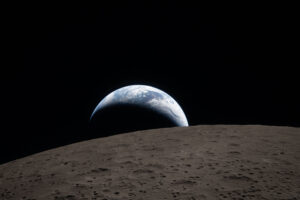
NASA’s Aerospace Safety Advisory Panel will soon open a formal recommendation that NASA re-examine plans for the Artemis IV mission. Currently that will be a landing at the Moon’s South Pole, the first time American astronauts set foot on the Moon since 1972. ASAP has a number of concerns especially about the Human Landing Systems being built by SpaceX and Blue Origin. ASAP also pointed out challenges in NASA’s future low Earth orbit plans both for operations of the International Space Station and commercial replacements for it as SpaceX phases out Falcon rockets and Dragon spacecraft.
Reporting on their fourth quarter 2026 meeting today, the panel praised NASA Administrator Jared Isaacman for the many positive changes he’s making at the agency. They do have some concerns, however.
The Artemis program to return astronauts to the lunar surface scored a huge success in April with the successful Artemis II mission that flew around the Moon. Next up is Artemis III and the panel is very pleased that shortly after taking office, Isaacman modified that flight, changing it from a lunar landing mission to an earth-orbital flight to practice rendezvous and docking with test articles of the two Human Landing Systems — SpaceX’s Starship and Blue Origin’s Blue Moon MK2.
But ASAP is worried about Artemis IV, now envisioned as that first Artemis lunar landing. Not only has it been more than 50 years since NASA landed anyone on the Moon, but it was with a different type of vehicle and in comparatively safe areas closer to the equator. Artemis IV is headed to the Moon’s South Pole, an entirely dissimilar environment with steep slopes, low Sun angles, and temperature extremes.
Artemis IV involves a large number of firsts. For starters, the Human Landing Systems or HLSs, are completely new designs and require in-space refueling to fulfill the task of ferrying astronauts between lunar orbit and the surface. An in-space fuel depot is needed where cryogenic propellant can be stored and replenished to compensate for boil-off. Orbiting fuel depots don’t exist yet and in-space cryogenic propellant transfer hasn’t been demonstrated. At a meeting of the National Academies’ Space Studies Board on Tuesday, Kelvin Manning, NASA Deputy Associate Administrator for Human Exploration, said SpaceX plans to demonstrate in-space cryo transfer in early 2027, a long-awaited first step, but just a step.
ASAP member Charlie Precourt, a former NASA astronaut, said today they’d been told that 22 launches would be needed to provide the requisite amount of propellant for the lander to reach lunar orbit. (In a post on X, SpaceX CEO Elon Musk said that was incorrect and it would be 6-8.) Precourt also noted NASA is requiring only one uncrewed test to demonstrate the HLS can land, followed by an engine restart.
NASA is not requiring a demonstration of the ability to lift off and return to lunar orbit. Manning said on Tuesday the uncrewed SpaceX landing test is planned for late 2027.
Precourt also pointed out today this will be the first time cryogenic propellants are used on the lunar surface (Apollo used hypergolics), in a location where mission abort options are more limited than Apollo.
The timeline is another challenge, Precourt continued.
Isaacman is determined to land astronauts back on the Moon before President Trump leaves office in January 2029 and before China lands taikonauts there. NASA will give an Artemis update tomorrow, but for now the plan is for the earth-orbiting Artemis III in 2027 and Artemis IV in 2028. Isaacman has said he hopes for a second landing in 2028, too.
ASAP said they will soon open a new recommendation to Isaacman about how to proceed with Artemis to ensure safety.
“We’re going to recommend that NASA re-examine the mission objectives, potentially the system architecture for Artemis IV and the subsequent missions, to establish a more balanced approach to risk, prioritize the objectives-driven planning, and maintain a consistent cadence of flight missions.
“For every test objective, including objectives related to uncrewed demonstration missions by the lander system coming from the service providers, NASA should develop a detailed plan for testing and data collection, incorporating both ground and flight tests to ensure that all risks are thoroughly identified and mitigated. This structured approach will provide a more balanced sequence of flight tests, ultimately supporting a successful crewed lunar landing and the creation of a sustainable lunar base.” — Charlie Precourt
ASAP also reported on NASA’s plans for human spaceflight in low Earth orbit (LEO). The International Space Station (ISS) has been continuously occupied for almost 26 years — the November 2 anniversary is coming up shortly — and NASA plans to deorbit it in 2030. NASA wants continued access to LEO space stations so astronauts can conduct research needed for future missions to Mars, but doesn’t want to build another one itself. Instead it wants to facilitate commercial companies to build private space stations where it can be one of many customers.
Among the challenges is that development of commercial stations — Commercial LEO Destinations or CLDs — is happening more slowly than anticipated in part because NASA has been reconsidering how best to engage with the commercial companies. The agency issued the final Request for Proposals (RFP) just two weeks ago .
ASAP member Paul Hill, who was Director of Mission Operations at NASA from 2007-2014, pointed out how interconnected the future of ISS and CLDs are, especially now that SpaceX has announced plans to discontinue the Falcon rocket family and the Crew and Cargo Dragons that are essential to U.S. human LEO operations today. Crew Dragon is the only U.S. vehicle that can ferry crews to and from ISS right now. One U.S. alternative to Cargo Dragon is available, Northrop Grumman’s Cygnus, and Japan’s HTV-X also can deliver cargo, but Crew Dragon, Cargo Dragon, and Falcon were expected to be available indefinitely for ISS and future CLDs. Musk said in August he will wind down Falcon once Starship is operating reliably.

Kent Rominger, another former NASA astronaut who is a member of ASAP, noted that the U.S. Deorbit Vehicle (USDV) being built by SpaceX under contract to NASA is required to deorbit the ISS and intended to launch on Falcon. He said SpaceX plans to phase out Falcon in 2030 if Starship is ready to replace it, and if a decision is made to extend the ISS lifetime (as proposed by legislation pending in the Senate), a different rocket would be needed to launch it.
Meanwhile, getting at least one CLD operating before the ISS ends is a challenge, as well as ensuring there are crew vehicles to take astronauts back and forth. NASA contracted with SpaceX and Boeing in 2014 to build two different crew vehicles to ensure redundancy and competition, but Boeing’s Starliner experienced repeated failures over several years and Crew Dragon is the only one available. NASA continues to work with Boeing to get Starliner ready for routine crew flights, but the agency is requiring another uncrewed test before committing to putting astronauts aboard as it did in 2024. Those astronauts had to return to Earth on a Crew Dragon instead of Starliner after thruster failures . NASA and Boeing have been targeting December or January for the uncrewed test, Starliner-1, but Rominger said today it remains under review and will be no earlier than mid-January. NASA and Boeing said last month the next crewed flight will be no sooner than mid-2028.
Panel members saw the ISS/CLD developments as part of a broader context where NASA’s move towards commercial partnerships may not always lead to desired results. “This dilemma is an example of the challenge about acquisition and contract types that NASA is using for firm, fixed-price service contracts for space systems development in the hopes of creating a commercial market or industry,” Hill said. “Calling it commercial did not make it so. Calling them partners did not make them so.” Providers “may make a perfectly legal and perhaps logical business decision” to move on.
ASAP considers continuous human access to LEO as imperative and stressed that NASA now must manage the cost and technical risks of getting Starliner safe to fly NASA crews, while also trying to facilitate CLDs. If it comes down to a choice between ensuring transportation to LEO or a LEO destination, transportation should be the priority.
“In the classic chicken or egg dilemma between a LEO platform versus LEO transportation, the panel sees a reliable, robust, and continuous LEO transportation solution as a necessary first priority, without which any platform, ISS or other, cannot be exploited.” — Paul Hill
Hill argued that the RFP NASA just issued for CLDs is “not without risk.” The award for the first phase of development won’t be issued until the fall of 2027 making it unlikely a CLD will be ready before the ISS is deorbited, even if it’s extended to 2032. “The panel encourages NASA and their congressional and executive stakeholders to assess the LEO system development and acquisition strategies and ensure they are also aligned with enhancing NASA’s ability to succeed in their difficult missions.”
ASAP was established by Congress following the 1967 Apollo 1 tragedy that killed astronauts Virgil “Gus” Grissom, Ed White and Roger Chaffee and reports both to Congress and NASA. It meets quarterly and provides a public recap of its findings via telephone only. Minutes are eventually posted on the ASAP website , but those for December 2025, March 2026 and June 2026 are missing as of now, although August 2026 is there.
Reported by SpacePolicyOnline.com. Reproduced unedited by Everything Space. View the original →
What do you make of it?
Nobody has weighed in on this story yet.
Related in the Atlas